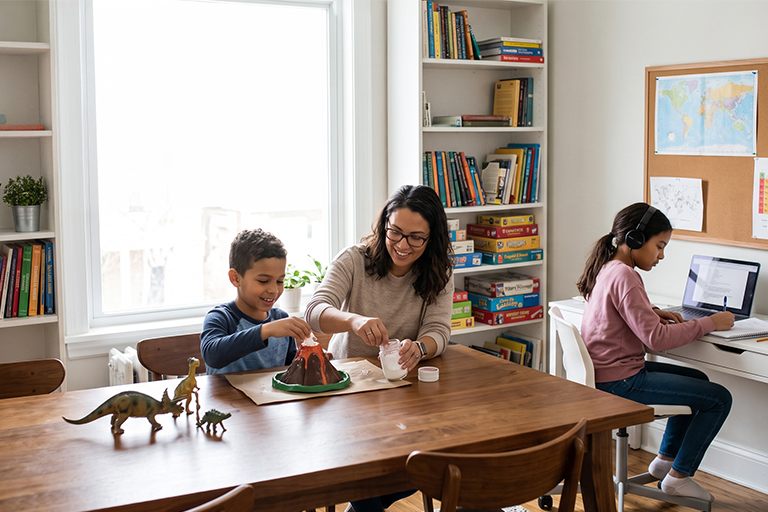
Recently, homeschooling has moved from a niche alternative to a mainstream educational powerhouse, with nearly six percent of all U.S. students now learning from home. Families are increasingly recognizing that the traditional “one-size-fits-all” model often fails to account for the unique strengths, interests, and schedules of individual children. From academic superiorities to emotional well-being, homeschooling offers a logical, evidence-based solution for the complexities of modern life.
1. Academic Excellence and College Readiness
A primary concern for many parents is whether homeschooling can match the academic rigor of traditional institutions. Research consistently shows that it not only matches but often exceeds those standards. Sixty-two percent of peer-reviewed studies indicate that homeschooled students outperform their institutional peers on academic tests.
- Higher Achievement: Homeschooled students possess higher average ACT scores (26.5 vs. 25.0) and higher high school GPAs (3.74 vs. 3.54) compared to conventional students.
- College Success: Admissions officers often prefer well-documented homeschool portfolios because they demonstrate self-motivation and intellectual curiosity. Data shows that 66.7% of homeschooled students graduate college within four years, compared to 57.6% of traditional students.
- Learning for Mastery: Unlike traditional classrooms that move to the next lesson regardless of individual understanding, homeschooling allows for a “learning for mastery” approach, where children take the time to become highly proficient in a subject before moving on.
2. Unmatched Flexibility for Work and Lifestyle
The modern family dynamic is rarely a 9-to-5 constant. Homeschooling provides a “portable” education that fits into a family’s real life rather than forcing life to fit around a school bell.
- Working Parents: It is 100% possible to work and homeschool by utilizing block scheduling, loop scheduling, or self-paced online learning. Most homeschoolers can finish core subjects in just 2 to 4 hours a day, leaving ample time for career and extracurricular pursuits.
- Frequent Movers: For military families or those who relocate for work, homeschooling provides essential stability. Instead of losing 4 to 6 months of progress with every move, children can pick up exactly where they left off, regardless of their zip code.
- Physical Health: Homeschooled students gain an average of four more hours of sleep per week, which is directly linked to better mental health and superior academic performance.
3. Fostering Social Fluency and Emotional Safety
The most common myth about homeschooling—that children lack socialization—is debunked by both research and observation. In fact, homeschooling often produces children who are better adapted to social environments.
- Age-Diverse Interaction: Unlike conventional schools where kids only interact with their exact age group, homeschoolers regularly socialize with people of all ages through co-ops, community groups, and real-world activities. This prepares them for the diverse social landscape of adulthood.
- Mental Health: Studies show that homeschooled students experience significantly lower levels of depression and negative self-image. They are shielded from the “comparison culture,” bullying, and social hierarchies that can lead to school refusal and anxiety.
- Stronger Family Bonds: Homeschooling allows parents to be active participants in their child’s journey, creating opportunities for meaningful conversations and deeper connections that are often lost during long school days.
4. A Thriving Environment for Neurodivergence
For children with ADHD, autism, dyslexia, or sensory processing differences, a traditional classroom can be a source of constant overwhelm. Homeschooling offers a personalized refuge.
- Individualized Instruction: Lessons can be paced to a child’s unique style, moving quickly through mastered material and slowing down for challenges, which reduces frustration and builds confidence.
- Sensory Control: Parents can minimize distractions by providing a quieter environment, flexible seating, and necessary movement breaks.
- Interest-Driven Learning: Passion for subjects like engineering, art, or technology can be used as a powerful tool to teach core concepts across multiple subjects, increasing intrinsic motivation.
The Bottom Line
Homeschooling is not about perfection; it is about giving your child an education tailored specifically for them. While it requires commitment and sacrifice, the result is often a child who is not only academically prepared but is also a self-directed, curious, and socially confident individual. Whether you are seeking a safer emotional environment, academic excellence, or the flexibility to live life on your own terms, homeschooling is a logical and rewarding fit for the modern family.

 844-977-0040